Showing posts with label Randomly Nerdy. Show all posts

Sunday, March 23, 2014

Confessions of a Wannabe Cosplayer: Part II.

Hello readers!  I am so glad to be back to regular posting after a few life changes derailed the previous restarting of the blog.  I missed you all.

You might recall that a year ago, I wrote a post Confessions of a Wannabe Cosplayer.  With the encouragement of a few fellow bloggers, I have decided to turn that post into a recurring series and chronicle my ongoing internal battle between the desire to cosplay and social anxiety, insecurity, and inhibition.  I'm hoping that eventually the series will culminate in attending a con.  I don't want to put myself under too much pressure, so we'll have to see!

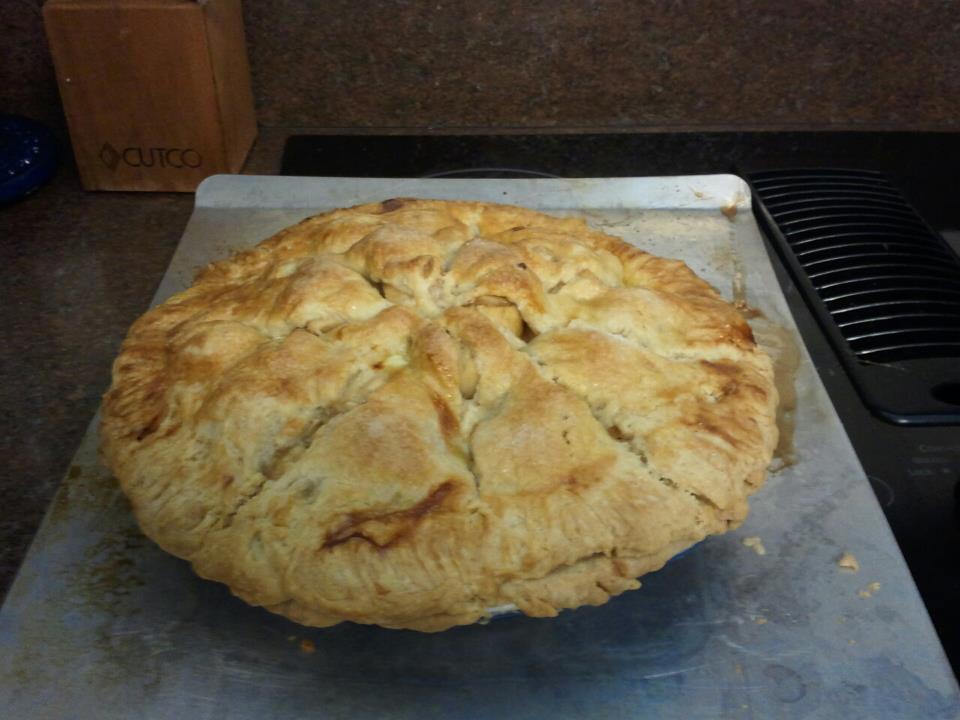
Yes, please.

In that first post, I mentioned that I hadn't dressed up for Halloween in eight years. Where I live, Halloween has become more about casual neighborhood cookouts than costume parties, communal bowls of candy rather than trick-or-treating, and even kids seem to dress up far less often than they did when I was little.

I hate it.  I don't know exactly when or why this transition occurred, but stereotypes about adults who dress up started popping up all over the place: They don't want to grow up.  They're self-involved and narcissistic.  They're ridiculous.  (And often, for women: They're s***s... that will have to be another post). And I bought into it.  I bought into the patently absurd idea that dressing up as someone else says something about one's personality besides, "I like this character, and I like dressing up."  Some people who dress up might immerse themselves in fantasy worlds to a degree that others would consider unhealthy.  Some might be narcissistic.  Some might be ridiculous.  But... the same could be said about everyone, including that guy in jeans and a t-shirt at the gas station.

(Image from wikipedia)

Like Mr. Nerd, he dresses up as an extra from Grand Theft Auto, 
every. single. year.

I will never be a professional cosplayer.  That doesn't fit in with my life and schedule.  But I finally decided that my first step toward any sort of cosplaying would be dressing up again for Halloween. I love steampunk costumes and had seen various pictures of steampunk Disney princess ideas, so I settled on Snow White.  Because I don't (aka can't) sew and didn't want to go out spend much money, I just bought a few extra items like a red bow and welder's goggles and used my own clothes, changing an old shirt into a skirt with a pseudo-bustle in the back (courtesy of scissors and duct tape).

I had no party to go to, didn't plan on going trick-or-treating, and am not a club/barhopping type of person.  So I asked the question on Facebook: Adults running errands and doing daily activities in costume on Halloween: awesome or weird?  The response was overwhelmingly positive.  Most people said things like, "I once saw someone dressed up as [character] at the grocery.  It totally made my day!" or even, "YES DO IT."  And you know what?

I did.


I went to the grocery.  Went to the crafts store to buy cake decorating supplies.  Went to the park. Got lunch.  All in costume.  I won't pretend that I felt totally comfortable or at ease; I didn't.  I often felt awkward and scared and was so worried that someone would say, in a tone that made it clear that they thought I was a nutcase, "Um, why are you dressed like that?" that I sometimes had difficulty getting out of my car.

The truth is that other than a friend from a former workplace, no one commented at all.  I only saw two other adults in costume the entire day.  Sometimes I wonder if people assumed that because a lot of my costume was re-purposed everyday clothing, I was just a girl with a very unorthodox sense of style.  Even though I didn't receive any positive reinforcement, I didn't receive any disparaging remarks either.  A few stares and odd looks, sure.  At times I nearly crumbled under those stares.  I had to keep in mind that those looks weren't inherently negative responses.  I was the one assuming that the motivations behind the stares were negative.   But no one came up and berated me for being "too old to dress up."  No one laughed at me.  No one asked me why I wasn't dressed "like a normal person."  I took solace in that.  I even started to have--wait for it--fun.

So this year, when Halloween rolls around, I might just have to do it again.  


**Blog notice: you might have noticed that the "Redefining Sexy" post never happened.  I had it written and ready to publish at the beginning of the year, but then I read it through and realized that I didn't have anything original to add to the discussion that already took place in October 2013.  If you would like a list of the posts other bloggers have done on the topic, see Les Gros Bonnet's Redefining Sexy Round-up.**

Sunday, September 8, 2013

Just, Loyal & True; Embracing a Hufflepuff Sorting.

We all* take them: the "What [Popular Movie/Book] Character are You?" quizzes.  And secretly, we all have a desired outcome.  When the quizzes give us a result that we don't like or expect, we shrug it off and say, "It's just a silly online quiz. I know I'm actually more like so-and-so."  Sometimes we're right.  Other times, we miss an opportunity.  Having someone else (or someone else's quiz) tell us that we resemble a certain character-- or in this case belong to a certain Hogwarts house-- can prompt interesting discussion and introspection.


When I first took an online sorting quiz, I wanted to be placed in Ravenclaw.  It's where nerds go, right?  It's the house of the bookish, brainy ones.  I suppose I would have been OK with Gryffindor as well.  Gryffindors are cool.  I actually like Slytherin a lot, but I knew that I had very few qualities to recommend me to that house.  What I got?  Hufflepuff.  My reaction wasn't frustration or sadness.  No, my reaction was complete and utter indifference.  Hufflepuff.  Eh.  Of course, curious as to whether another quiz would yield a different result, I took another one.  Hufflepuff again.  Every sorting quiz I've taken in the past ten years has given the same verdict.  And it wasn't until recently that I acknowledged that the quizzes weren't wrong; I was a) in denial, and b) unfairly deeming Hufflepuff House plebeian and irrelevant.

I would outline all the reasons that Hufflepuff doesn't deserve to be seen as "a lesser house," but I think this list of Hufflepuff's oft-overlooked awesome traits already does that.  I think it's true that in many ways, Hufflepuff just isn't as exciting as the other houses.  Captivating an audience is part and parcel of a novel, and writing about people who have lots of ambition, or a knack for getting into trouble, or are often singled out for their accomplishments creates a more enthralling story line. Nice People tend to get overlooked or shunted aside.  Think about A Song of Ice and Fire... in general, how well does anyone do who has the defining attributes "just" and "fair"?  It's strange, but I think many of us don't realize how much we admire Hufflepuff-like qualities until the people who possess them are gone.  Then we think, Wait... that's not right. I liked him/her!  Then we begin to wonder... is "exciting" really all it's cracked up to be?  And is it a necessary trait to strive for in real life?   This article in defense of Hufflepuff says "no."

"It's nice to be important, 
but it's more important to be nice."
- John Cassis

The first part of that article's title is a bit misleading, because one of the author's conclusions, with which I wholeheartedly agree, is that all houses have their own strengths and pitfalls... just like individuals (imagine that!).  I also love that she mentions that bravery, ambition, intelligence, and loyalty aren't the sole domains, respectively, of Gryffindor, Slytherin, Ravenclaw and Hufflepuff.  Dumbledore complimented Harry on his loyalty to his friends.  Fred and George Weasley were highly ambitious in their career aspirations.  Cedric Diggory was brave enough to be a Hogwarts Triwizard Champion. Hermione was the "brightest witch of her age."

I can be a nerdy Hufflepuff.  It's not an oxymoron.  I love reading, science, logical discourse, and well-researched data.  I do.  But I also remember facial expressions and the overall gist and tone of a conversation or lecture much better than I remember intellectual details, have an inclination to do what I feel is right rather than analyze a situation, and actually value honesty and fairness more than intelligence.  I cannot stand even feeling disloyal; if someone has ever been kind to me or has ever shared good times with me, even if we haven't spoken in twenty years, I likely still consider him/her my friend.  I will work hard on assigned tasks and do my best in any competitive arena, but I don't thrive on competition.  I don't like or purposefully involve myself in heated arguments, but I will "go to bat" and stand my ground for anyone who I think is being maligned or mistreated.

I'm no longer ambivalent about my sorting.  I'm a Hufflepuff.  And there's no shame in it.

Image from: redbubble.com


*I realize this is hyperbolic.  


Friday, August 16, 2013

Thesaurus Thursday: "Beleaguer."/People are Nosy.

Today's word is "beleaguer," a verb meaning to harass or besiege.

If you have ever been questioned about or chastised for what you choose to wear, whom you choose to associate with, or what you do in your spare time, here's a word of warning: you will be beleaguered by "well-meaning" individuals to an even greater degree if job prospects are involved.

*********************

I was thinking about this the other day.  The laundry list of questions and advice regarding your personal life during job hunting would border on offensively intrusive at any other time.  I'll give you some examples from my past experience:

Make sure you don't put anything inappropriate on Facebook.
If I spewed hatred on my page, talked about illegal activities, or was obviously emotionally unstable, I could understand concern.  I don't/am not.  You might find out that I (gasp!) like bras.  Also, sometimes I talk about boobs on my blog page. I have them.  A lot of other people have them. Pretending that they aren't there is a bit silly.

Isn't talking about bras/boobs inappropriate?
Is it?  Please give me a non-sexist answer to this question: Why? 


Ahhh!  So NSFW!

Are all of your friends' blogs/pages free of questionable content?
If you have read 1984, you should understand why this question scares me.

Make sure your blog's content is OK.
One moment... Yes, it's fine. It hasn't had an emotional break down and run away.

Are all of your pictures safe for employers to look at?
All of my wedding photos contain subliminal messaging telling viewers to ruthlessly pursue world domination.

No, I mean the pictures on your blog's page.
Bras usually cover as much if not more than bikinis.  I always thought going to the beach was a G-rated activity.
I haven't been in a while; maybe I'm remembering it wrong?

But sometimes in bras you can see a glimpse of what's underneath.
You know, I saw a man topless on Facebook once.  He didn't even have a bra on.  I've been shocked about the lack of an outcry.  I mean, think of the children.

You need to make sure that no one can get your personal information.
I'll do everything within my power to keep away creeps, but if you believe that not having a Facebook/Twitter/Instagram/other account means that people can't easily access your personal information if they really want it, I have a mansion on Mars to sell you.

Don't post anything offensive online.
This is related to the first but usually refers to objectively offensive content.  It's an instruction that basically assumes that I'm stupid and/or a bad person-- why else would I post something offensive?  I suppose a lot of Twitter users might be offended by the occasional update about how much I dislike horribly botched grammar.

LEFT TACKLE. 
I just posted something offensive.

You need new clothes.
Please note that the clothes I'm currently wearing don't meet the criteria for an office dress code because I am at dinner with my husband and not at an interview.  Does job hunting make everyone think that they have the right to comment on every. single. outfit. I wear in public? (The answer is, apparently, "Yes.")

Don't dye your hair/get anything pierced/get tattoos during this time.
While I would check out a dress code to make sure that I could easily comply with it, I would neither respect nor work for someone who wouldn't hire a competent, qualified individual on the basis of physical appearance.

Network/refine your resume/do X and not Y in an interview...
All suggestions regarding resumes, applications, interviews, and networking have been filed under "Advice given by 10+ people.  This morning."

Try to act like all you ever do is go to church.
...
...
...
...  Seriously?


Sunday, August 4, 2013

The Malazan Book of the Fallen: A Break-Up Letter.

Dear MBotF,

It's not you; it's me.

...OK, maybe it's a bit you.   I don't often not finish a series.  I usually feel as if my willpower has failed me and that I ought to get to the end just to be able to say, "I didn't like it, and yes, I read it all the way through," to the barrage of questions along the lines of, "Why didn't you like it?  Did you even read it?  Did anyone tell you it gets better?"  I know I've only read two books out of ten, but you haven't changed yet, and I don't want to waste my time believing that you will suddenly become The One.

We started out so well.  The beginning was all sinister scenes and captivating intrigue.  I suppose I should have known that this would foreshadow a fling rather than a long-term relationship, because you got complicated fast.  I'm no stranger to elaborate plot lines, extensive magic systems, or novels packed with detail-- I adored Brandon Sanderson's first book of The Stormlight Archives and Robert Jordan's Wheel of Time novels.  But you assumed that I knew your history as soon as we met.  You give bits and pieces here and there, but it's often difficult to form into a coherent whole, and true explanations come later than needed.  I'm still not certain how or why a warren works, and I don't want to have to read with a Wiki open.   You introduced the Bridgeburners as if everyone knew exactly who they were and what they did in the time before the series picked up in their story.  Did you drop hints that finally formed into a narrative?  Sure, but I don't like feeling like an author is toying with me for kicks.

OK, sometimes I tolerate it.

You seem to leave your friends in the lurch occasionally.  Just when I think I'm getting to know your characters, you shift settings and introduce me to a barrage of new people at once.  Even though they are often good characters-- no one-dimensional heroes or villains here; Mappo and Icarium were fascinating, and their story line nearly had me in tears-- but switching so often is jarring and slows reading time to a crawl.  I don't mind reading slowly, but not that slowly; I would prefer to be able to read more than one series in this lifetime, thank you.

Sometimes I also think you try to make up for any weaknesses with shock value.  Detailed descriptions of gruesome violence and horrible illness abound.  I understand that an empire is in turmoil and that various factions (both imperial and otherwise) are trying to take control, and I acknowledge that it must include unspeakable horrors.  But I much prefer the subtle double-crossings and nuanced personal relationships that you are so, so excellent at conveying to the nauseating drawn-out descriptions of crucifixions and dysentery.  Others might applaud the "realism," but as someone who has read, watched, and enjoyed A Game of Thrones, you disturbed even me.

Like Norman Bates levels of disturbance.

I know there are people who will appreciate you.  My feelings and preferences don't necessarily extend to others.  We're just not compatible, and I think it best that we go our separate ways.

Sincerely,

The Absurd Curvy Nerd


Wednesday, June 5, 2013

Bedknobs, Broomsticks, and How Many Bookshelves?

I'm not exactly a "neat freak."  I try to keep a clean house, but I do occasionally forget the laundry in the hamper or suddenly notice that dog hair has taken over our furniture.  But when I clean up, I like things organized in very specific ways.  Mr. Nerd once found me in the closet holding up two shirts and mumbling to myself.  When he asked what I was doing, I said that I was sorting my clothes according to ROYGBIV, of course, and which shirt did he think was closer to indigo?  Sorting kitchen supplies by purpose is all well and good, but I'd like them separated by frequency of use as well.  Spices?  Alphabetical order only goes so far; sweet and heat need to be apart from each other.

We had a bit of meltdown of order recently, so some of these things aren't "right," and I'm itching for the opportunity to fix them all.  The disorder makes me anxious, which in turn makes me less likely to do anything to correct it, which then makes me more anxious... it's a vicious cycle.  Whenever I feel panic rising, I turn to books.  Reading is my therapy.  Sometimes just looking at the books has a calming effect, because our books, being some of the few inanimate objects Mr. Nerd and I truly care about, are always well-organized.  And we have a lot of books.

Of course, it doesn't help when an entire shelf looks like this.
The next one down is all Terry Pratchett.

There are pluses and minuses to book hoarding.  The best things?  The first ones that come to mind are the feel and the smell.  I would purchase "Old Book" instead of "New Car" smell in a heartbeat.  And there is just something about the crinkles around the page edges and lines in the spine of a well-loved book that makes me nostalgic and about the crisp edges of a new book that gives me shivers of anticipation.  The memories are another wonderful aspect of books.  Picking up a book that I read or had read to me when I was younger and rereading it is like taking a bite of a chocolate and tasting hints of peppermint or cinnamon that I've never noticed before that make it just that much more delicious.  I feel like I'm in my room growing up, head and shoulders under the covers reading until late at night, hoping my mom won't peek in and start telling me that old wives' tale about how reading in the dark will damage my eyes just so that I will go to sleep.  But at the same time as the books bring memories of the past, I can pick up on nuances of humor, plot, and character development that I might not have noticed or been too immature or inexperienced to appreciate the first time around.


           "You can't get a cup of tea big enough 
               or a book long enough to suit me."
     -C. S. Lewis

There are more practical pros to book hoarding, like always having a copy of a classic when it is assigned at school.  I know some schools allow electronic books now, but not all do, and I've always been frustrated by those mouse-over comments in electronic formats.  Yes, I've written in many books, and yes, I know that is sacrilege to some.  But I always think it is entertaining to find my old comments when reading, especially if I'm having a completely different reaction to the book.  Another fun part of book hoarding is having interesting research material or completely random information that happens to be useful.  Want to know why your parents or older siblings keep referring to a country called Czechoslovakia?  We have geography books spanning three generations.  Curious about how the economy of the 80's compares to the one now?  We have various textbooks and nonfiction books by economists in both decades.  What did they add to this textbook that made it imperative to get the newest edition?  Look in the previous edition; we probably have it.

Of course there are problems with book hoarding.  Emotional attachment can make it hard to accept that certain books would be appreciated at new homes.  We try to donate/give away old books and also have a trade-in store nearby that will sell the books at very low prices.  But sometimes it can become difficult to let go.  And the most obvious problem that has to be mentioned: books take up space.  We don't mind much, as we would rather have them than most decorations, but when a well-meaning relative gives us a pretty vase and says, "Well, we could just make a little space on this shelf...," it's difficult to say, "No, no you can't.  The book stops here."  Also, when we get a new book, sometimes it is hard to put it where it belongs without moving another, and one book in a set on a different shelf than its counterparts always looks so sad and lonely.


And then I inevitably start singing "Carnival Town."


Books are wonderful in the old-fashioned sense of the word.  Don't get me wrong- I love my Kindle.  I remember a time when going on vacation meant one suitcase for clothes and another for books, so I do love the convenience (and the fact that I can store so many more books on it; I think if we had hard copies of all the books we own, we would be beyond eccentric and into pathological territory), but... I just can't imagine a world without printed books.

There was an old woman 
who lived in a library.
She sat in a corner
with too many books to carry.

She had grand adventures
going on in her head.
And she always wanted to read
one more chapter before going to bed.

 Yes, I'll be that woman.

Saturday, May 25, 2013

A Dose of Skepticism (Can be a Coping Skill).

I debated whether to split this up into two parts but in the end decided against it, so this will be a lengthy post.  I hope everyone enjoys it enough to stick around!

Many of you, like me, will first come across scientific research findings in popular media.  I really don't like the hype that studies can get simply because they are about controversial, socially relevant, or otherwise important issues.  Then there's the way that researchers/media will, for publicity's sake, draw spectacular conclusions based on insubstantial evidence or using biased arguments.  Then there's how people take those conclusions and get ever more angry with one another as logical fallacies and peudoscience* supply the front for a perfect storm of anger, blame, smugness, egomania and all-around emotional chaos.

xkcd.com
Pictured: Everyone on the internet.

Here are some more conspicuous problems that I would like to point out:

Correlation does not imply causation.

Two things seem related, so one has to be caused by the other, doesn't it?  Well... no.  One might cause the other, but some other variable might actually be the cause of either or both.  It's why it is so difficult to say things like "video games cause real-life violence."  They might, or already violent people might gravitate toward certain video games.  Or they might be one factor among many.  Or they might not be a factor at all, but so many people play video games that it's unlikely to find a truly violent person who doesn't.  I'm not saying any of those are correct, but they're all possibilities.  Be critical if you see an article that doesn't at least account for those possibilities.

In certain circumstances, confusing correlation with causation can go beyond conveying misleading information and create harmful perceptions.   Think about it this way: a headline reads "People Under 6'5" More Intelligent."  The article says that on a certain graduate-level math exam, researchers found that exam takers over 6'5" didn't do as well as those under 6'5".  We can conclude that it must be all that extra height, can't we? It was researched, so it must have at least a grain of truth to it, right? ... And now a stereotype exists that taller people are unintelligent.  It was so easy to leave out or downplay the part where those over 6'5" who participated in the study were more likely to be on a professional sports team and have left college early.

The study also concluded that Einstein would be more likely 
to do well on the test than the general public.

Quotable does not mean unquestionable.

People love to quote others, especially if the quote comes from someone famous or influential.  It doesn't matter if the people they quote are/were actually kind or good or right or making any sense, because what they really love is quoting others who agree with them.  Yes, many quotes are hilarious or interesting or thought-provoking and deserve recognition, and some state facts or are almost universally acknowledged to be true, like a man in possession of great fortune being in want of a wife. However, your favorite public figure saying something doesn't make it true.

And according to the internet, these two men said everything.

Having a higher degree doesn't make someone right all the time.  Having done extensive research in a certain field doesn't bestow All The Knowledge.  Being well-known does not grant someone wisdom.  I am half convinced that if Benjamin Franklin had said, "Beer is proof that God loves us and wants us to be happy while drinking under the bright noonday olive green sky," people would be looking at you funny and calmly quoting Benjamin Franklin as you pointed to the sky screaming, "It's blue!  Blue, I tell you!"


I have an opinion, and studies will prove that I'm right.

Quoting only people who agree with an opinion is part of a larger issue known as the confirmation bias.    This occurs when researchers look for and use only data that supports their hypotheses.  Let's say that Jamie believes that dark-haired short women with small waists are most attractive.  Jamie googles "short dark hair small waist perfect" and finds tons of studies saying... you guessed it... that a short, dark-haired woman with a small waist is the "ideal" woman.  Jamie cites those studies and then gives friends and family a Y/N questionnaire that asks, "Do you think dark-haired women are attractive?" "Do you think women with small waists are attractive?" "Do you think shorter women are attractive?" Jamie sees that over half of participants answer Y, and suddenly we have:

STUDIES CONFIRM:
SHORT DARK-HAIRED WOMEN WITH SMALL WAISTS MOST BEAUTIFUL.
(Now I'm finally free to put down women who don't meet my standards, because science.)

... Only it's not good science.  Looking up preferred characteristics in conjunction with the word "perfect" skewed results in favor of Jamie's opinion from the start.  Then the questionnaire won't allow people to say whether they find other qualities more personally appealing.  Jamie also gave the questionnaire to a group of people who are more likely to hold similar opinions.  These are only a few of the problems.  While most research isn't this blatantly biased, the confirmation bias certainly exists.  That it's usually well-disguised only makes it more problematic.

Statistics and numbers can be manipulated.

Hark, a quote!  The one I referenced briefly in the post Intolerance Isn't Awesome, "There are three kinds of lies:  lies, d***ed lies, and statistics," was popularized by Mark Twain.  I'm going to show why I think this quote is relevant, even if it is perhaps hyperbolic.  First, I don't believe all statistics are really lies.  "Statistically significant" in research is important.  But it needs to be taken in context, because numbers can be used like this:

"I don't eat vegetables, because statistically many American women who eat vegetables aren't expected to live past age 80."
Would those be the same women who statistically aren't expected to live past 80 anyway?

Apple Juice: Made with 100% real fruit juice.  

It might be the juice of freshly picked apples with and nothing else, or it might be "100% real" juice from three different fruits and added sugar.

People who drink lemonade 12%** more likely to die in summer months.
People who drink lemonade might be outside more during summer and nearer to water sources, where they would naturally be more likely to drown than those who stay inside.  Death by Lemonade would be a misnomer unless the deaths were due to citrus allergies or choking on seeds.

Lemons don't kill people.  
Kindergartners trying to make an extra $5 on weekends in July kill people.

Remember that it matters who does the research and who pays for it as well.  A large painting company probably won't publish research that says fumes from their paint have caused a significant number of illnesses.

They'll spin you right 'round, baby. 

There are news channels and publications with obvious political leanings and agendas, and they can put "spin" on stories like nobody's business. Sometimes they're even forthright about it.  Unfortunately, most of the time reporters don't come out and say, "We are trying to get you to think in a particular way about this," but do just that.  If you ever see facts "floating" in articles that seem jarring in the flow of the writing, or if you don't see citations, or if you notice that a strangely high number of comments agree with what seem like extreme conclusions, proceed with caution.  In the media, not giving all the facts or giving some facts out of context isn't the same as lying... it's journalism. I don't see this kind of insidious reporting disappearing any time soon, so I believe that people need to be able to recognize it.

We <3 straw men and ad hominem attacks.


"How can you talk if you haven't got a brain?"
"Some people without brains do an awful lot of talking, don't they?"
-The Wizard of Oz***

Mary says "I think we should raise the legal BAC to 0.09."

Dave can disagree with that statement if he wants.  He can talk about what a BAC of 0.09 does to a person physiologically.  He can discuss the probability of accidents occurring with a BAC of 0.09 or below.  What he does instead is say:

Wrong. Having no consequences for driving impaired will make people do it more often, and then it the roads will naturally become more dangerous.

This is a straw man argument.  It makes the other person's opinion open to or easier to attack by distorting it.  It builds up a straw man- a sort of scapegoat opinion- in order to burn it down.  Mary didn't say that there shouldn't be consequences for impaired driving or that the road wouldn't become more dangerous without those consequences.  All Mary said was that she thinks there ought to be a change in the legal definition of "drunk."  Dave is more interested in getting others on his side.  If Mary points this out, though, there is always the possibility of this occurring:

Why should people care what some stupid ugly troll thinks?

Ouch.  ... Wait.  Aside from "attractive" being subjective.... how are Mary's looks relevant?  And does using the label "troll" make her a troll?  (A: They aren't, and no).  This is an example of the logical fallacy argumentum ad hominem (lit. "to the man argument").  It means avoiding the issue at hand and going straight for personal insults and character attacks to discredit someone.  Politics is infamous for these "smear campaigns."  Let's not talk about how to fix a problem or why a particular plan won't work.   Let's focus on the fact that the other guy is wealthy, or poor, or black, or white, or wears glasses, or is a loud breather, or has one foot larger than the other.  And then let's make it seem like that matters.  Instead of appealing to intelligence, logic, or common sense, we'll darn well appeal to peoples' prejudices.  It's easier and still effective.****

*************************

So when looking at new information, question what you read.  Do the legwork to see if there is more information out there.  Look at citations.  See whether research has been replicated; repetition seems boring, but it lends a lot more credibility.  Don't assume that numbers don't lie.  And if you're easily lured in by headlines or can't look away from the virtual train wrecks that are Public Comment Sections, keep the above in mind.  They've helped me stay afloat in a sea of professional manipulators, and I hope they can help you.


*Note: If you read Intolerance Isn't Awesome (link in post), you will realize that by "pseudoscience" I'm NOT referencing religion in any way, shape or form.  I do not equate fake science and faith.
**Yes, I pulled this number out of my magic hat.  I was looking for a rabbit, but I suppose you take what you can get.
***Help, I can't stop the quotes!  Depending on context, this could actually be an ad hominem attack by Scarecrow if he used that line in a debate...
****This is a call to everyone who uses ad hominem attacks or goes along with ones the media perpetuates (let's be honest; we all do it at times): Argumentum ad hominem is the lazy way out.  It is an indication that you don't have a better argument.  If you feel superior afterward, all it means is that you feel good about putting others down, not that you really are superior.  Think about what that says about smear tactics.  They- I'm going to use "they" for anyone who uses smear tactics- get you to fall for inferior arguments by appealing to that little part of your brain that says, "Of course I'm better than he is/she is/they are. That's a given."  They believe that you aren't savvy enough to think any further than that.  And if you go along with them, you're going along with those who either don't want to or can't come up with a good argument.  Do they sound like people you can trust?  Respect?  Admire?  


Sunday, April 7, 2013

The Art (and Science!) of Baking.

I recently made a cake in the shape of a flower pot for a family member's birthday, using chocolate cake as the "dirt" and marshmallow fondant for the pot and flowers. It was my first attempt at making a cake that wasn't just a two-layer normally-iced cake, and while I need practice (especially at making fondant flowers), for my first time I think it turned out pretty well.  I was also a lot of fun!


I got tired of cutting out shapes and used mint from the garden for the leaves.

While I was rolling out the fondant, it occurred to me that I know very little about the mechanisms behind baking.  I love making cakes, breads, and cookies, and I can follow a recipe on how much to mix, when to knead, when I need to take whatever it is I'm baking out of the oven, etc., but I don't know why.  So I've done a little research and learned about some of the science behind baking.  I'm not going to go into any chemical reactions that take place, but here are some of the things I've learned:


1.  Marshmallows are made up of water, sugar and air bubbles.  Heating them in the microwave causes the water molecules to vibrate, which causes the sugar to heat up and warms the air in the bubbles.  The gas molecules in the air bubbles start to move faster when heated and push against the softened water and sugar mixture, so the air bubbles expand and the marshmallows puff up.

2.  Egg whites bind ingredients together and work as leavening agents because they are made up of mostly protein, while egg yolks make baked goods moist and richer because of their higher fat content. This is why cake recipes usually call for whole eggs.  Using one or the other would make a cake too dry or too soggy.  
Incredible and edible!

3.  Bringing eggs to room temperature will make them separate easier and make them combine with butter more evenly by preventing the formation of- for lack of tastier-sounding words- fat globules.

4.  Baking soda, like yeast, is a leavening agent that releases carbon dioxide.  Whipping those carbon dioxide bubbles that are produced with butter "fluffs" batter to help give it the right texture.  

5.  Cold butter stays in little pieces when added to the flour mixture for a pie crust instead of blending in homogeneously and being absorbed by the flour; the butter then melts in little pockets while baking and creates that traditional "flakiness."  

All I'm really doing is making myself hungry.


6.  You might think that adding extra sugar to bread dough will just make it sweeter, but adding more sugar than is called for in a recipe can make the yeast create too much gas (because yeast "eats" sugar to release carbon dioxide).  This can break any gluten bubbles formed while kneading, causing the bread to fall instead of rise correctly.  (You can make gluten-free breads if you avoid gluten for personal or health reasons by using a blend of different gluten-free flours; they just may not rise as high and will have a different consistency.)


If you have any questions about baking or cooking, let me know, and I will be more than happy to research it!


Resources:

Sunday, March 24, 2013

Only YOU Can Prevent Grammar Meltdowns.

I don't go around continuously correcting people's grammar, but I do sometimes feel feverish when I see the same mistakes over and over again. I make no claim to perfection myself.  However, A) I get frustrated when people try to act like they have a superior intellect and use language they think makes them "sound smart" but isn't actually correct, and B) there are certain mistakes that I do not understand coming from students who have been required to attain at least a high school-level education and have had English classes from Kindergarten on. What I really don't understand is how students turn in school work or make speeches with these errors that could be easily eliminated by a quick review by peer tutors, friends/family, and even sometimes teachers themselves.

"By the donzerly light," is cute only when you're this age.

So without further ago, I give you my top five English language pet peeves:

#1  The Dr. Whom Complex: trying to sound more educated than others by using "whom" when "who" is actually correct.

If I wanted to sound condescending above, I could have said "I do not understand certain mistakes from students whom have been required to attain a high school-level education."

Sound fancy? Yes. Correct? No.  People often get confused when the word "who" comes after a preposition like from, by, with, for, etc. but isn't the object of that preposition. "Whom" is always an object, and "who" is always a subject. To test, remember that you can often rephrase a sentence as a question and substitute me, her/him, us, or them for whom and I, she/he, we, or they for who.

*Correct*: That is the girl from whom I borrowed some sugar.  (Whom did I borrow sugar from?  I borrowed sugar from her.)
*Incorrect*: I borrowed sugar from that girl whom has just moved in next door.  (Who just moved in next door?  She just moved in next door.)

Similarly, people sometimes use "I" instead of "me" when wanting to sound intelligent.  "Me" is an object, not a subject.

"The graduation party is just for the valedictorian and I."  Nope.

*Correct*: She is the same age as Julie and I.  ('Finish' the sentence: She is the same age as Julie and I are.)
*Incorrect*: She graduated with Julie and I. (Take out Julie to see if the sentence still makes sense.   She graduated with I?  No, she graduated with me.)

#2  Captain Carrot Syndrome: Overusing or underutilizing the comma.

As a general rule, use commas if you are making lists, in if-then clauses, or if you could take out conjunctions (and, but, etc.) and still form complete sentences.

Comma Needed: Commas are useful, but they should only be used when necessary.  (You can take out "but" and divide this into full sentences.  Commas are useful.  They should only be used when necessary.)

Comma Not Needed: Commas are useful but should only be used when necessary.  (You cannot take out "but" and divide this into full sentences.  Commas are useful.  Should only be used when necessary.  The second isn't a full sentence.)

Comma Needed: If you are a human being, you are a Homo sapien.  (If-then.)

Comma Not Needed: I am a human being and therefore a Homo sapien. (You cannot take out "and" and divide this into two sentences.)


#3  These are Not the Words You're Looking For: Using the words "irregardless," "kinda/sorta," and "like" in formal writing/speech.

Irregardless might be in the dictionary one day due to its widespread use... 


... but for now it is still a made up word that people use in place of "regardless," its real-word counterpart.  It is often another case of Dr. Whom Complex; people think "irregardless" is an intelligent-sounding word, so they don't bother finding out that it isn't a word at all.  

Kinda and sorta are fine to say or write informally, but they do not belong in formal papers or speeches.  If you must, write or say "kind of" or "sort of," but those are still wishy-washy terms that most teachers prefer you avoid.  Do remember, though, that "kind of" can be legitimately used to mean "type of."  

"Like" doesn't need much explanation. As with "kind of," remember that it has actual uses, such as in comparisons or explanations.  That whistling sounded like it came from a bird is a fine sentence.  The problem comes when you insert it into sentences that don't need it to make sense.  It's as if the whole world is like completely oblivious to the fact that people use the word "like" too much.


#4  Vowels, Vowels, Everywhere: the misspellings "independant," "definately," and "genious." 

I don't know why these particular misspellings bother me more than others, but they do.  Independent has only e's as vowels, definitely has two i's and two e's, and genius has no o's.  Perhaps it bothers me because they always have the red squiggly Spell Check line under them, so why not use Spell Check? 

(Image from www.componentone.com.)
Those words must be underlined in red because they're just that awesome.


#5   Going Homophone Happy: "You're" and "your" being mixed up (also "they're," "their," and "there").  

These are probably some of the most common mistakes made, but they're like nails on a chalkboard to me.  You're = contraction of you + are.  You're riding a bike.   If you're ready, we will go to the movies now. Your = possessive adjective.  That is your bike.  Your friends would like to go the movies.  

They're = contraction of they + are. They're going with you to the movies.  Their = possessive adjective.  Those are their bikes. There can be a noun or an adjective but is most often used as an adverb meaning "to/in that place."  The movie theater?  We went there after dinner.

...You're going to roll your eyes at me for being a dork, now, aren't you?

*******************

It is true that language evolves.  Just one look at Chaucer's Canterbury Tales will confirm that.  It is also true that some grammar rules can (and should) be broken in certain cases; we wouldn't have poetry otherwise.  I break a few traditional rules fairly often.   I have no guilt using "And" or "But" to begin sentences when not writing a formal paper and sometimes will use one word as a "sentence" for emphasis.  But I suspect it will take a long, long time for language to evolve so much that the above rules become obsolete, and I doubt that your teacher will accept the argument, "We could be spelling independant with an 'a' in the next few hundred years or so!" when you turn in your paper.

Sunday, March 3, 2013

The Doctor Says What? How an "M.D." After One's Name Doesn't Necessarily Mean "Infallible."

My Thesaurus Thursday this week was a sort of sneak preview to my post today.  Like so many others, when I get sick or start to feel like something isn't quite "right" with my body, I tend to look online before heading to the doctor's office.  Unlike many people who do this though, I generally look up symptoms so that I can have a list of questions to ask my GP "in case of an emergency situation."  I generally don't panic and think I have some rare disease each time I get a cold with a few symptoms I don't usually experience.  I like to think that I'm savvy enough to know when the advice and information given online is factual and when it's complete nonsense, but nowadays it's very hard to tell.

... Words don't even describe how upset this article makes me. 
It doesn't even deserve a picture.

Most people with a throbbing headache on one side of their forehead have migraines, but type in the symptom, and you'll get millions of people asking "Do I have a brain tumor?" or "Am I having an aneurysm?"  I've found that doctors who answer questions online are not really helping the, for lack of a better description, hypochondriac culture that prevails on the internet.  And when something serious could be going on, but it's not within their expertise, they usually say, "This is generally not an issue," or go on to explain something that they do know, often insensitively and without regard for the feelings of the questioner.  

"Yeah, sure it'll hurt.  Not as much as getting the baby out, though, so tough noogies."


An example I found: one poor woman was told by her doctor that she had an STI when they tested her for a certain type of bacteria.  Her rambling question conjured up pictures of a young woman nearly in tears and on the verge of a breakdown because she was so certain both she and her husband had been faithful and had never been with anyone else before they met, and could she have gotten this any other way? The online doctor responded by saying that STI's are only spread through sexual activities, so either she or her husband must have contracted it, trying to "soften the blow" by saying "perhaps before the marriage."  After doing some research myself (and talking to a couple of my own doctors about it to make sure that I was on the right track), it became apparent that this type of bacteria is often spread through sexual activities but is not even a "true" STI, as it can also be passed by innocent skin-to-skin contact with a carrier or inhalation of the bacteria, such as when a carrier sneezes.  It can also pass through the placenta during prenatal development, so you can be born with it.  

So this "doctor" has now needlessly put it into this woman's head that she or her husband has either cheated or lied.  He ought to have done the research himself- she told him the bacteria- and reassured her that no, it could happen to anyone and is easily treatable.  "First do no harm" seems to go out the window when doctors start answering questions online.  I have seen doctors say that clearly life-disrupting symptoms are all in a patient's head (ever hear of tact?), that 1300 calories a day is a normal intake for a healthy woman, that you can't have PCOS unless you carry excess weight around your midsection, and make various other ridiculous claims, and they all have the letters "M.D." "Ph.D.", "RN" etc. after their names.  


So please, doctors on the internet, if you are going to be no more helpful than the people who answer questions on Yahoo! Answers who go around telling poor unsuspecting people that getting a common UTI is a sure sign that your partner is cheating on you, please get off the internet.  There are plenty of reputable doctors, nurses, psychiatrists, and other health professionals out there who would be ashamed. 

Wednesday, February 27, 2013

Just a Little Something to Brighten Your Day.

I'll be back to Thesaurus Thursday + weekend/early week full-length post schedule starting tomorrow.  In the meantime, enjoy this meme I made of our corgi Zoe.  I consider her our honorary fuzzy nerd, if only because her sire was Captain Kirk!


Monday, January 7, 2013

Confessions of a Wannabe Cosplayer.

I haven't been in a costume since Halloween my freshman year in college.  That was almost eight years ago now.  Yet every time I see an adult in costume going to a convention- or just a Halloween party- I get rather jealous.  The truth is, if I could dress up every day, I would, and I don't know if I'm just too timidly introverted to go to events that encourage dressing up or if I'm afraid that I'm just not nerdy enough to fit in with the crowd that does attend. I don't mean that as a sleight, either; I envy their enthusiasm and (sometimes) considerable skill.   You see, I don't play video games, and when I look at pictures from, say, DragonCon, I see row after row of characters I don't recognize, and I feel... a bit like a mathematician who has just been shown the numbers π, e, and i and declared, "I don't know what those mean" to the bemusement of her peers.


√-1 23 Σ π.
My grandmother made four on Thanksgiving.


Then, there's the Booth Babe vs. Talented Cosplayer issue. I'm not too proud to admit that I would gravitate toward costumes that show off my shape.  In the past I found that being in costume made me feel more confident about my appearance; I actually think that wearing an awesomely fitting costume, no matter your size or shape, can give you a whole new perspective on and appreciation for your body.  Sometimes I worry, though, that because I have no sewing or artistic talent (at least in clothing/armor/accessory design), I'd be more in the position of finding characters with whom I have some features in common/don't think would be difficult to copy and trying to emulate them using off-the-rack items and be considered a "fake."

I was going for Charlie Chaplin-as-a-Blues-Brother. Don't judge me.


I am also aware that a significant portion of cosplaying females wear scraps of regular clothing covering enough not to be arrested.  I don't have a problem with skimpy clothing, if you're not in a school or workplace with a specific dress code and are complying with state laws.  But I wouldn't want to fall into the trap of wearing less with the mindset "I'm trying to attract attention by doing this," because that is simply unfair to those who truly deserve the attention even when they are fully covered up.  Yet I am naturally drawn to outfits I find physically alluring.

So, when I fall head over heels for corsets like this:


then tell myself that I can't wear it in everyday life and probably won't ever attend a party or con to wear it to, I wonder whether I'm being practical... or just letting social anxiety and fear get in the way.