Showing posts with label Nerdy Multimedia. Show all posts

Sunday, December 29, 2013

The Blog is Back (and I Need Help from Whovians).

Hello again, everyone!  The new year hasn't arrived yet, but the holiday madness has abated here, so the blog will be fully up and running again soon with a full-length post (likely next weekend; all I need to do is edit/put in pictures).   In the meantime, I have a question for all of the Whovians out there.

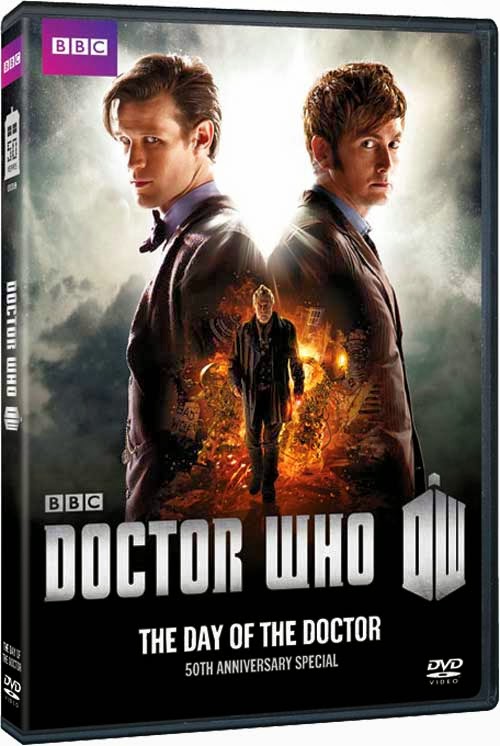
I became a Dr. Who fan only recently, but I quickly fell in love with the show.  My Christmas presents from Mr. Nerd were:

  
and
t-shirt from skreened.com

                                                           
... But I would love to watch classic Dr. Who, and I have no idea where to start.  We have Amazon Prime*, and it seems like it has only random episodes within the already random episodes that exist among the various missing ones. I've tried looking up suggestions online, but most conversations I find devolve into arguing about whether or not "new" fans are truly fans, and I just don't have time for that kind of nerd cliquishness. I only need to know if there is a best "viewing order," if you will, for classic episodes, and I would like to know the best way to find these episodes.** If I need to purchase a DVD/Blu-ray, I will.  Of course, if I need to buy episodes, I'll save up to get them at a later date and content myself with more Grimm, Bones, and new seasons of Downton Abbey and Sherlock.  ... That makes it sound like I watch too much TV.   All right, I probably do, but I'm not that bad, guys.  If you'll excuse me, I have another episode of Robin Hood to watch.


What's on your watch list in 2014?


*We don't have Netflix.  We don't intend to get Netflix.  Please do not suggest Netflix (or other competitors to Amazon) unless you are certain that it is the only way to view particular episodes or a similar scenario.
** See (*) again.


Sunday, September 8, 2013

Just, Loyal & True; Embracing a Hufflepuff Sorting.

We all* take them: the "What [Popular Movie/Book] Character are You?" quizzes.  And secretly, we all have a desired outcome.  When the quizzes give us a result that we don't like or expect, we shrug it off and say, "It's just a silly online quiz. I know I'm actually more like so-and-so."  Sometimes we're right.  Other times, we miss an opportunity.  Having someone else (or someone else's quiz) tell us that we resemble a certain character-- or in this case belong to a certain Hogwarts house-- can prompt interesting discussion and introspection.


When I first took an online sorting quiz, I wanted to be placed in Ravenclaw.  It's where nerds go, right?  It's the house of the bookish, brainy ones.  I suppose I would have been OK with Gryffindor as well.  Gryffindors are cool.  I actually like Slytherin a lot, but I knew that I had very few qualities to recommend me to that house.  What I got?  Hufflepuff.  My reaction wasn't frustration or sadness.  No, my reaction was complete and utter indifference.  Hufflepuff.  Eh.  Of course, curious as to whether another quiz would yield a different result, I took another one.  Hufflepuff again.  Every sorting quiz I've taken in the past ten years has given the same verdict.  And it wasn't until recently that I acknowledged that the quizzes weren't wrong; I was a) in denial, and b) unfairly deeming Hufflepuff House plebeian and irrelevant.

I would outline all the reasons that Hufflepuff doesn't deserve to be seen as "a lesser house," but I think this list of Hufflepuff's oft-overlooked awesome traits already does that.  I think it's true that in many ways, Hufflepuff just isn't as exciting as the other houses.  Captivating an audience is part and parcel of a novel, and writing about people who have lots of ambition, or a knack for getting into trouble, or are often singled out for their accomplishments creates a more enthralling story line. Nice People tend to get overlooked or shunted aside.  Think about A Song of Ice and Fire... in general, how well does anyone do who has the defining attributes "just" and "fair"?  It's strange, but I think many of us don't realize how much we admire Hufflepuff-like qualities until the people who possess them are gone.  Then we think, Wait... that's not right. I liked him/her!  Then we begin to wonder... is "exciting" really all it's cracked up to be?  And is it a necessary trait to strive for in real life?   This article in defense of Hufflepuff says "no."

"It's nice to be important, 
but it's more important to be nice."
- John Cassis

The first part of that article's title is a bit misleading, because one of the author's conclusions, with which I wholeheartedly agree, is that all houses have their own strengths and pitfalls... just like individuals (imagine that!).  I also love that she mentions that bravery, ambition, intelligence, and loyalty aren't the sole domains, respectively, of Gryffindor, Slytherin, Ravenclaw and Hufflepuff.  Dumbledore complimented Harry on his loyalty to his friends.  Fred and George Weasley were highly ambitious in their career aspirations.  Cedric Diggory was brave enough to be a Hogwarts Triwizard Champion. Hermione was the "brightest witch of her age."

I can be a nerdy Hufflepuff.  It's not an oxymoron.  I love reading, science, logical discourse, and well-researched data.  I do.  But I also remember facial expressions and the overall gist and tone of a conversation or lecture much better than I remember intellectual details, have an inclination to do what I feel is right rather than analyze a situation, and actually value honesty and fairness more than intelligence.  I cannot stand even feeling disloyal; if someone has ever been kind to me or has ever shared good times with me, even if we haven't spoken in twenty years, I likely still consider him/her my friend.  I will work hard on assigned tasks and do my best in any competitive arena, but I don't thrive on competition.  I don't like or purposefully involve myself in heated arguments, but I will "go to bat" and stand my ground for anyone who I think is being maligned or mistreated.

I'm no longer ambivalent about my sorting.  I'm a Hufflepuff.  And there's no shame in it.

Image from: redbubble.com


*I realize this is hyperbolic.  


Sunday, August 4, 2013

The Malazan Book of the Fallen: A Break-Up Letter.

Dear MBotF,

It's not you; it's me.

...OK, maybe it's a bit you.   I don't often not finish a series.  I usually feel as if my willpower has failed me and that I ought to get to the end just to be able to say, "I didn't like it, and yes, I read it all the way through," to the barrage of questions along the lines of, "Why didn't you like it?  Did you even read it?  Did anyone tell you it gets better?"  I know I've only read two books out of ten, but you haven't changed yet, and I don't want to waste my time believing that you will suddenly become The One.

We started out so well.  The beginning was all sinister scenes and captivating intrigue.  I suppose I should have known that this would foreshadow a fling rather than a long-term relationship, because you got complicated fast.  I'm no stranger to elaborate plot lines, extensive magic systems, or novels packed with detail-- I adored Brandon Sanderson's first book of The Stormlight Archives and Robert Jordan's Wheel of Time novels.  But you assumed that I knew your history as soon as we met.  You give bits and pieces here and there, but it's often difficult to form into a coherent whole, and true explanations come later than needed.  I'm still not certain how or why a warren works, and I don't want to have to read with a Wiki open.   You introduced the Bridgeburners as if everyone knew exactly who they were and what they did in the time before the series picked up in their story.  Did you drop hints that finally formed into a narrative?  Sure, but I don't like feeling like an author is toying with me for kicks.

OK, sometimes I tolerate it.

You seem to leave your friends in the lurch occasionally.  Just when I think I'm getting to know your characters, you shift settings and introduce me to a barrage of new people at once.  Even though they are often good characters-- no one-dimensional heroes or villains here; Mappo and Icarium were fascinating, and their story line nearly had me in tears-- but switching so often is jarring and slows reading time to a crawl.  I don't mind reading slowly, but not that slowly; I would prefer to be able to read more than one series in this lifetime, thank you.

Sometimes I also think you try to make up for any weaknesses with shock value.  Detailed descriptions of gruesome violence and horrible illness abound.  I understand that an empire is in turmoil and that various factions (both imperial and otherwise) are trying to take control, and I acknowledge that it must include unspeakable horrors.  But I much prefer the subtle double-crossings and nuanced personal relationships that you are so, so excellent at conveying to the nauseating drawn-out descriptions of crucifixions and dysentery.  Others might applaud the "realism," but as someone who has read, watched, and enjoyed A Game of Thrones, you disturbed even me.

Like Norman Bates levels of disturbance.

I know there are people who will appreciate you.  My feelings and preferences don't necessarily extend to others.  We're just not compatible, and I think it best that we go our separate ways.

Sincerely,

The Absurd Curvy Nerd


Friday, May 10, 2013

Do You Bow Before the Queen of Blades? Or Cringe?

The entire backstory for the StarCraft games would take up too much of this post, so if you are interested, you can read it here.

Disclaimer: As I have mentioned, I'm not a gamer myself.  I watch Mr. Nerd play.  I watched him finish StarCraft II: Wings of Liberty and the Heart of the Swarm campaign, and he also got me hooked on multi-player StarCraft replays.  The truth is I have no coordination and lack the quick reflexes to have any desire to play myself (...is it bad that I don't start things unless I know I can eventually become good at them?).  Yet I still enjoy watching others, and I have thoroughly enjoyed watching StarCraft II.  But if you're a die-hard fan and player, don't be too harsh with me.  This is just one woman's opinion based on what she has learned and seen.

********************

I have noticed that Sarah Kerrigan, aka the Queen of Blades, is ranked highly as a character by fans and critics.  But I must say that I am baffled by her.  I'm not sure whether to like or dislike her character.   Where better to explore that further than here on the blog?

Kerrigan vidsnap.

What I like:

Well, she has psychic powers.  So that's pretty awesome.

She is a strong female character, but by no means is she perfect.  I really, really dislike "all-powerful" characters without weaknesses, because I find them too unbelievable.*  Her story line, which is helped out by various StarCraft novelizations, has her accidentally killing her mother and damaging her father's brain before being recruited for the Ghost (commando and assassin) training program as a child.  That is a heck of a lot to live with, but live with it she does.  She even resists psychological torture in the program, to the point that they have to implant a neurological device to limit her powers and make her biddable for the Confederacy.  I don't think a lot of kids could withstand that. The device is taken out eventually, but that story sets up her character well: a woman with a moral compass that occasionally flashes to the surface but has been twisted and warped until she is easily used as a tool in others' destruction.

I think that makes it more terrifying when she becomes the Queen of Blades. She seems to enjoy finally having an outlet and then going after someone who she believes deserves to be killed (when she goes after Mengsk the second time she is infested).  She is an effective tactician as a Terran and uses that along with ruthlessness and manipulation when she is infested.  But she makes mistakes and cannot anticipate every move made by her opponents.  I suppose that would be obvious, otherwise there would be no real point to the games, but I still like that she acts genuinely surprised at times.  She also provides others in the game (and the player) with an enemy that they sometimes fear, sometimes loathe, sometimes respect, sometimes pity.  She is multidimensional, like a real person.  I also like that she doesn't make excuses for her actions as the Queen of Blades when she becomes human again.  Anyone who starts playing the blame-game gets on my nerves immediately.

The Queen of Blades.


What I don't like:

Obviously, I don't like that she murders millions of Terrans, Zerg and Protoss.  There is that.

I'm not a huge fan of the "government-made killing machine" used in multimedia.  I disliked it with River Tam in Firefly, too, however awesome her fighting skills and crazy observations.  I realize StarCraft came first; I'm just pointing out that this is a general preference.  I suppose this was resolved when I learned that the neuro-adjuster was taken out, because as stated, I like to see more conflicted characters, because I don't enjoy feeling as if I'm watching a robot.  Still, that was a turn-off for me.

I also didn't like the relationship between Kerrigan and Jim Raynor.  I realize that is a major part of the story, but it feels... forced to me, somehow.  It is almost as if Kerrigan falls for Jim just because he is the first person ever to show sympathy for her.  It seems like a very unequal, stereotypical relationship, with her depending on him and him acting as the savior.  She actually tells him that she "doesn't need saving" at one point, but this is proved false time and again.  It's annoying and doesn't seem to fit with the rest of her character.  She even asks Jim- when she is human- to basically put her down if her darker qualities ever made her lose control.  So he becomes very intent on killing her when she turns into the Queen of Blades, at least until he finds out that she can be changed back.  Note that I am not trying to give a commentary on euthanasia here at all: it just struck me as a pet/owner relationship throughout rather than a relationship between two people.  I almost preferred their interactions with Kerrigan as the Queen of Blades.  I really hated it when she heard that Jim had been killed and reinfested herself for revenge purposes.  Kerrigan: we know that you're intelligent, and it didn't occur to you that this might have been a lie?

That's really all there is to say.

Finally, what's up with the Zerg thong?  I realize that women in video games are often caricatures with exaggerated and emphasized "feminine" features.  I can even almost understand the skintight human armor  if we're going for "fits like a second skin" for maximum maneuverability, cloaking, etc. (although why it also has to have some sort of pseudo-thong-wedgie in the back is beyond me).  I also understand that she's not fully Zerg.  But heels and a thong for an infested Terran... really?

Nerd trivia: Sarah Kerrigan was voiced by Tricia Helfer in Wings of Liberty and Heart of the Swarm.  Tricia played the Cylon operative Number Six in Battlestar Galactica (2004).


*Dear Bones, this is why Pelant is merely tiresome now.  I get the feeling that you believe he is a character that viewers love to hate.   I think- and as far as I can tell from the heap of reviews I've read, others agree- this isn't true; he's just a character that viewers want gone before they have to boycott an otherwise good show.

Sunday, April 21, 2013

A Song of Ice and Fire: Favorite Female Characters.

!SPOILER ALERT!
Edit: I can't get the spoilers that affect the plot fully blacked out; I will continue trying.  I'm going to try not to use too many spoilers, though. I do welcome comments, so if you want to ask or say something specific, please write "S/A" before your comment.  Thanks!

Image from www.fanpop.com.

Perhaps it's just my perception- though I think many would agree with me- but female characters in fantasy novels and movies often seem one-dimensional and sometimes merely there for the "hotness factor."  So I was pleasantly surprised when I read A Song of Ice and Fire and watched the Game of Thrones series.  Yes, many of the actors and actresses are typically good-looking, but then so are their characters, and they play their parts well.  What I love is that George R. R. Martin gave unique personalities (both bad and good) to his female characters in ASoIaF, and I think that is why the story works better on TV than a lot of book-to-film adaptations.  The characters aren't solely defined by their looks, even when/if their looks do play a part, and it lends strength to the narrative.

Below are my top three favorite female characters:

#3: Sansa Stark

I know, I know, many of you are thinking "What?  Sansa's a hateful little spoiled brat."  Most of my thoughts about Sansa, especially about her ultra-femininity, are actually well summed up by the post In Defense of Sansa Stark (S/A) on the blog Feminist Fiction. Yes, she was a brat... at first.  However, in Game of Thrones, she's also a freaking 11 year old girl.  She had little experience dealing with the world beyond Winterfell.  She was fanciful and naive.   I think her growing up, with the rose-colored glasses coming off, is one of the more interesting, nuanced story lines.  Sansa might be capable of lying to protect those to whom she feels she owes something- which unfortunately included Joffrey in GoT- but she thought that was the worst she could expect from others as well.  She couldn't fathom that others would hurt or kill because of lies, because she wouldn't.

"Please tell me I didn't think that."

Sansa's awful mistake was that she gave her loyalty and trusted too freely.  She had the romantic notion that a prince should cater to his betrothed, so when she denounced her father as a traitor to prove herself to Joffrey and Queen Cersei, she likely expected him to be stripped of his title or exiled, not beheaded. She realized her mistake.  She matured.  She knows better.  Now she has learned how to stay alive to fight another day, which in Westeros is quite an achievement in and of itself.

#2: Olenna Tyrell

Ah, the Queen of Thorns.  She might not get much "screen time," (I haven't seen all of the GoT TV series yet(!!)- I just know she didn't in A Storm of Swords), but she is extremely entertaining.  In some places I have seen Olenna Tyrell referred to as the "Dowager Countess of Westeros."

"Deary me.  And possibly Lawks."*

Like Maggie Smith's character on Downton Abbey, she does indeed have a sharp wit and is definitely not someone you want as an enemy.   She tries to protect the innocent and those she loves, but she is not blind to faults, even calling her own son an "oaf" for the way he handles playing the game of thrones. She tries to keep Sansa safe by marrying her off to her grandson to get her away from King's Landing, a plot foiled by the Lannisters marrying her off to Tyrion.   She thinks rulers would be better off listening to their mothers and not constantly bickering.  And of course, if the only thing you know about her is that she had a role in Joffrey's death, you probably like her.

And my favorite female character...

#1:  Brienne of Tarth.

Brienne is a very, very good warrior.  This alone does not make me like her, but the dedication she shows to her chosen profession does.  She tries to live by traditional, honorable knightly standards, even though she is often told that most knights are far from honorable.  In many ways, she is the polar opposite of Sansa's GoT character.  She is considered both unattractive, even ugly, by many. People have to be kind and generous to her to earn her loyalty.  I actually like the fact that she is depicted as insecure and wanting acceptance.  I don't mean that I like it when people have those feelings, but that side of her character makes it extremely easy to relate to her, even if you're not a morningstar-wielding bad-ass.  When she is asked by Catelyn Stark to escort Jaime to King's Landing to free Arya and Sansa, both of whom she thinks are prisoners there, I think Jaime sees in her a better person than he could ever be.  Possibly, he sees the kind of knight that he could have been in another life.

At least, I hope he does.  It's hard to say with a Lannister.

Brienne has the ability to inspire loyalty in others, and you find yourself wanting her to use that ability.  I just hope that she hasn't been influenced by un-Cat.  I know that Brienne was loyal to Catelyn, but Catelyn's zombie's actions have proven that she (it?) doesn't deserve loyalty, and even if I haven't come to like Jaime, I don't want Brienne to kill him on un-Cat's orders.  Brienne has qualities that are so much more valuable than looks: honesty, determination, and unwavering loyalty once gained, and I really want her to continue being a good person.  I also like that when people get to know her, they don't find her ugly anymore.  True ugliness is on the inside.

Do you agree with any of these?  Who are your favorite female characters in ASoIaF?


*The Terry Pratchett reference seemed to fit so well; I didn't want to waste the opportunity.

Sunday, April 7, 2013

The Art (and Science!) of Baking.

I recently made a cake in the shape of a flower pot for a family member's birthday, using chocolate cake as the "dirt" and marshmallow fondant for the pot and flowers. It was my first attempt at making a cake that wasn't just a two-layer normally-iced cake, and while I need practice (especially at making fondant flowers), for my first time I think it turned out pretty well.  I was also a lot of fun!


I got tired of cutting out shapes and used mint from the garden for the leaves.

While I was rolling out the fondant, it occurred to me that I know very little about the mechanisms behind baking.  I love making cakes, breads, and cookies, and I can follow a recipe on how much to mix, when to knead, when I need to take whatever it is I'm baking out of the oven, etc., but I don't know why.  So I've done a little research and learned about some of the science behind baking.  I'm not going to go into any chemical reactions that take place, but here are some of the things I've learned:


1.  Marshmallows are made up of water, sugar and air bubbles.  Heating them in the microwave causes the water molecules to vibrate, which causes the sugar to heat up and warms the air in the bubbles.  The gas molecules in the air bubbles start to move faster when heated and push against the softened water and sugar mixture, so the air bubbles expand and the marshmallows puff up.

2.  Egg whites bind ingredients together and work as leavening agents because they are made up of mostly protein, while egg yolks make baked goods moist and richer because of their higher fat content. This is why cake recipes usually call for whole eggs.  Using one or the other would make a cake too dry or too soggy.  
Incredible and edible!

3.  Bringing eggs to room temperature will make them separate easier and make them combine with butter more evenly by preventing the formation of- for lack of tastier-sounding words- fat globules.

4.  Baking soda, like yeast, is a leavening agent that releases carbon dioxide.  Whipping those carbon dioxide bubbles that are produced with butter "fluffs" batter to help give it the right texture.  

5.  Cold butter stays in little pieces when added to the flour mixture for a pie crust instead of blending in homogeneously and being absorbed by the flour; the butter then melts in little pockets while baking and creates that traditional "flakiness."  

All I'm really doing is making myself hungry.


6.  You might think that adding extra sugar to bread dough will just make it sweeter, but adding more sugar than is called for in a recipe can make the yeast create too much gas (because yeast "eats" sugar to release carbon dioxide).  This can break any gluten bubbles formed while kneading, causing the bread to fall instead of rise correctly.  (You can make gluten-free breads if you avoid gluten for personal or health reasons by using a blend of different gluten-free flours; they just may not rise as high and will have a different consistency.)


If you have any questions about baking or cooking, let me know, and I will be more than happy to research it!


Resources:

Sunday, March 24, 2013

Only YOU Can Prevent Grammar Meltdowns.

I don't go around continuously correcting people's grammar, but I do sometimes feel feverish when I see the same mistakes over and over again. I make no claim to perfection myself.  However, A) I get frustrated when people try to act like they have a superior intellect and use language they think makes them "sound smart" but isn't actually correct, and B) there are certain mistakes that I do not understand coming from students who have been required to attain at least a high school-level education and have had English classes from Kindergarten on. What I really don't understand is how students turn in school work or make speeches with these errors that could be easily eliminated by a quick review by peer tutors, friends/family, and even sometimes teachers themselves.

"By the donzerly light," is cute only when you're this age.

So without further ago, I give you my top five English language pet peeves:

#1  The Dr. Whom Complex: trying to sound more educated than others by using "whom" when "who" is actually correct.

If I wanted to sound condescending above, I could have said "I do not understand certain mistakes from students whom have been required to attain a high school-level education."

Sound fancy? Yes. Correct? No.  People often get confused when the word "who" comes after a preposition like from, by, with, for, etc. but isn't the object of that preposition. "Whom" is always an object, and "who" is always a subject. To test, remember that you can often rephrase a sentence as a question and substitute me, her/him, us, or them for whom and I, she/he, we, or they for who.

*Correct*: That is the girl from whom I borrowed some sugar.  (Whom did I borrow sugar from?  I borrowed sugar from her.)
*Incorrect*: I borrowed sugar from that girl whom has just moved in next door.  (Who just moved in next door?  She just moved in next door.)

Similarly, people sometimes use "I" instead of "me" when wanting to sound intelligent.  "Me" is an object, not a subject.

"The graduation party is just for the valedictorian and I."  Nope.

*Correct*: She is the same age as Julie and I.  ('Finish' the sentence: She is the same age as Julie and I are.)
*Incorrect*: She graduated with Julie and I. (Take out Julie to see if the sentence still makes sense.   She graduated with I?  No, she graduated with me.)

#2  Captain Carrot Syndrome: Overusing or underutilizing the comma.

As a general rule, use commas if you are making lists, in if-then clauses, or if you could take out conjunctions (and, but, etc.) and still form complete sentences.

Comma Needed: Commas are useful, but they should only be used when necessary.  (You can take out "but" and divide this into full sentences.  Commas are useful.  They should only be used when necessary.)

Comma Not Needed: Commas are useful but should only be used when necessary.  (You cannot take out "but" and divide this into full sentences.  Commas are useful.  Should only be used when necessary.  The second isn't a full sentence.)

Comma Needed: If you are a human being, you are a Homo sapien.  (If-then.)

Comma Not Needed: I am a human being and therefore a Homo sapien. (You cannot take out "and" and divide this into two sentences.)


#3  These are Not the Words You're Looking For: Using the words "irregardless," "kinda/sorta," and "like" in formal writing/speech.

Irregardless might be in the dictionary one day due to its widespread use... 


... but for now it is still a made up word that people use in place of "regardless," its real-word counterpart.  It is often another case of Dr. Whom Complex; people think "irregardless" is an intelligent-sounding word, so they don't bother finding out that it isn't a word at all.  

Kinda and sorta are fine to say or write informally, but they do not belong in formal papers or speeches.  If you must, write or say "kind of" or "sort of," but those are still wishy-washy terms that most teachers prefer you avoid.  Do remember, though, that "kind of" can be legitimately used to mean "type of."  

"Like" doesn't need much explanation. As with "kind of," remember that it has actual uses, such as in comparisons or explanations.  That whistling sounded like it came from a bird is a fine sentence.  The problem comes when you insert it into sentences that don't need it to make sense.  It's as if the whole world is like completely oblivious to the fact that people use the word "like" too much.


#4  Vowels, Vowels, Everywhere: the misspellings "independant," "definately," and "genious." 

I don't know why these particular misspellings bother me more than others, but they do.  Independent has only e's as vowels, definitely has two i's and two e's, and genius has no o's.  Perhaps it bothers me because they always have the red squiggly Spell Check line under them, so why not use Spell Check? 

(Image from www.componentone.com.)
Those words must be underlined in red because they're just that awesome.


#5   Going Homophone Happy: "You're" and "your" being mixed up (also "they're," "their," and "there").  

These are probably some of the most common mistakes made, but they're like nails on a chalkboard to me.  You're = contraction of you + are.  You're riding a bike.   If you're ready, we will go to the movies now. Your = possessive adjective.  That is your bike.  Your friends would like to go the movies.  

They're = contraction of they + are. They're going with you to the movies.  Their = possessive adjective.  Those are their bikes. There can be a noun or an adjective but is most often used as an adverb meaning "to/in that place."  The movie theater?  We went there after dinner.

...You're going to roll your eyes at me for being a dork, now, aren't you?

*******************

It is true that language evolves.  Just one look at Chaucer's Canterbury Tales will confirm that.  It is also true that some grammar rules can (and should) be broken in certain cases; we wouldn't have poetry otherwise.  I break a few traditional rules fairly often.   I have no guilt using "And" or "But" to begin sentences when not writing a formal paper and sometimes will use one word as a "sentence" for emphasis.  But I suspect it will take a long, long time for language to evolve so much that the above rules become obsolete, and I doubt that your teacher will accept the argument, "We could be spelling independant with an 'a' in the next few hundred years or so!" when you turn in your paper.

Saturday, March 9, 2013

15 Crazy Facts About Monty Python and the Holy Grail.

Monty Python and the Holy Grail has to be one of my favorite movies.  I can almost say all the words with the volume muted (though I get tangled up with the Knights Who Say "Ekke-Ekke-Ekke-Ptangya-Ziiinnggggggg-Ni.).  It is 100% absurd from start to finish, and as you can tell by my blog title, I love absurdity.  So for any Holy Grail fans out there- and people who might watch the film- here is a list of 15 facts about the movie that you might not have known.

1.  The opening credits with the "Swedish" subtitles were actually made because the film had no budget left.  When it first opened in Cannes, the audience enjoyed the credits so much that they thought firemen coming in to escort them out of the theater after the credits ended was a part of the show.  It was a real bomb scare.  Thankfully, it was a false alarm, and everyone got to finish watching the movie.


I was sacked before I could do my cameo.

2.  It was very unusual for Monty Python to use women for female roles.  However, women played all female roles in MP&THG except one, Dennis's mother.

3.  Patsy's only line in the entire film is, "It's only a model."

4.  This person has spent way too much time figuring out the average airspeed velocity of an unladen swallow.  Because of the movie, this question has become an extraordinarily popular for online search terms.

5.  There are various instances of black cats being abused in the film, probably as a nod to the superstition of black cats being bad luck.  Some say there are nine such instances in the movie, corresponding to the so-called nine lives of cats.  I haven't taken the time to count, because it's something I usually ignore (Note: I dislike animal abuse.  I don't think the film glorifies or promotes it in any way, though, and the "cats" are very obviously puppets).

6.  The "Scene 24" to which the narrator refers is actually Scene 13.

7.  Just in case you didn't figure it out from context: Fetchez la vache! = Get the cow!,  Ah, un cadeau! = Ah, a gift!, C’est un lapin. Lapin de bois. = It’s a rabbit, a rabbit of wood., On y va = Let’s go.

8.  The owner of the actual white rabbit used in the "killer rabbit" scene was not very pleased to find out that the red dye used as blood could not be washed out.  The cast spent quite a long time trying to scrub the rabbit clean before giving up.

"Oh, it's just a harmless little bunny, isn't it?"

9.  When King Arthur cuts the first leg off the Black Knight, a local silversmith with only one leg agreed to play the part.

10.  If you pay close attention, you will notice that Sir Lancelot actually breaks his sword while running to rescue a damsel in distress (who is actually Herbert).  Also, Herbert's potential wife goes from having blood on her face to having none on her face in a matter of moments after Lancelot slays many wedding guests.


11.  "It" has already been said by the time the The Knights Who Say Ni claim that the word is offensive to them.  In fact, they actually say "it" themselves ("It is a good shrubbery."/"You must place it here beside this shrubbery.").


12.  One scene scripted but not filmed had King Arthur and his knights finding the Holy Grail at Harrod's department store (because Harrod's has everything).


13.  Sir Not Appearing in This Film is actor Michael Palin's son.  The hand that turns the pages before the gorilla hand snatches it away is that of Terry Gilliam's wife (Gilliam himself wore the gorilla hand).


14.  "God" is actually a picture of 19th century English cricketer W. G. Grace.


Yes, this guy.


15.  Some people consider the ending a cop-out, because they did not film the British attacking the French castle at the end solely due to a depleted budget and time constraints. 


I hope everyone enjoyed these; if you want to see more, check out the resources below!


Resources: http://www.pajiba.com/seriously_random_lists/mindhole-blowers-20-facts-about-monty-python-and-the-holy-grail-that-might-make-you-say-ni.php

 http://www.imdb.com/title/tt0071853/trivia?tr0772380

http://tvtropes.org/pmwiki/pmwiki.php/Film/MontyPythonAndTheHolyGrail?from=Main.MontyPythonAndTheHolyGrail

Sunday, March 3, 2013

The Doctor Says What? How an "M.D." After One's Name Doesn't Necessarily Mean "Infallible."

My Thesaurus Thursday this week was a sort of sneak preview to my post today.  Like so many others, when I get sick or start to feel like something isn't quite "right" with my body, I tend to look online before heading to the doctor's office.  Unlike many people who do this though, I generally look up symptoms so that I can have a list of questions to ask my GP "in case of an emergency situation."  I generally don't panic and think I have some rare disease each time I get a cold with a few symptoms I don't usually experience.  I like to think that I'm savvy enough to know when the advice and information given online is factual and when it's complete nonsense, but nowadays it's very hard to tell.

... Words don't even describe how upset this article makes me. 
It doesn't even deserve a picture.

Most people with a throbbing headache on one side of their forehead have migraines, but type in the symptom, and you'll get millions of people asking "Do I have a brain tumor?" or "Am I having an aneurysm?"  I've found that doctors who answer questions online are not really helping the, for lack of a better description, hypochondriac culture that prevails on the internet.  And when something serious could be going on, but it's not within their expertise, they usually say, "This is generally not an issue," or go on to explain something that they do know, often insensitively and without regard for the feelings of the questioner.  

"Yeah, sure it'll hurt.  Not as much as getting the baby out, though, so tough noogies."


An example I found: one poor woman was told by her doctor that she had an STI when they tested her for a certain type of bacteria.  Her rambling question conjured up pictures of a young woman nearly in tears and on the verge of a breakdown because she was so certain both she and her husband had been faithful and had never been with anyone else before they met, and could she have gotten this any other way? The online doctor responded by saying that STI's are only spread through sexual activities, so either she or her husband must have contracted it, trying to "soften the blow" by saying "perhaps before the marriage."  After doing some research myself (and talking to a couple of my own doctors about it to make sure that I was on the right track), it became apparent that this type of bacteria is often spread through sexual activities but is not even a "true" STI, as it can also be passed by innocent skin-to-skin contact with a carrier or inhalation of the bacteria, such as when a carrier sneezes.  It can also pass through the placenta during prenatal development, so you can be born with it.  

So this "doctor" has now needlessly put it into this woman's head that she or her husband has either cheated or lied.  He ought to have done the research himself- she told him the bacteria- and reassured her that no, it could happen to anyone and is easily treatable.  "First do no harm" seems to go out the window when doctors start answering questions online.  I have seen doctors say that clearly life-disrupting symptoms are all in a patient's head (ever hear of tact?), that 1300 calories a day is a normal intake for a healthy woman, that you can't have PCOS unless you carry excess weight around your midsection, and make various other ridiculous claims, and they all have the letters "M.D." "Ph.D.", "RN" etc. after their names.  


So please, doctors on the internet, if you are going to be no more helpful than the people who answer questions on Yahoo! Answers who go around telling poor unsuspecting people that getting a common UTI is a sure sign that your partner is cheating on you, please get off the internet.  There are plenty of reputable doctors, nurses, psychiatrists, and other health professionals out there who would be ashamed. 

Sunday, February 24, 2013

I Hope I Parent Like Susan Sto-Helit.

If you like fantasy, satire, and side of silliness with your helping of thoughts on human mortality, it's difficult to find better fare than Terry Pratchett's Death novels, a five-book subset of his Discworld novels.  If you like strong female characters, it's difficult not to like Death's granddaughter... Susan.  Susan does not have children (it is difficult to maintain relationships when you're partly immortal); she is, however, a governess and then a classroom teacher.  I've decided that when I have children, I can take a few tips from her.

After meeting Susan as a teenager in the first novel, we see her again in her role as governess to two young children.  Susan is not pleased with the way the former governess handled the children by telling them that monsters would come for bad children and the scissor man would come for children who sucked their thumbs.  The children's belief in the monsters turns them into realities.

Real Life Parenting Lesson #1: I will not use scare tactics as incentives for my children to behave.  A child often cannot understand the difference between reality and imagination.  There is a difference between telling children about real threats to their safety and giving them nightmares.


Susan beats up a monster in the basement with a poker.  She does not hesitate to tell the children about monsters and bogeymen and how to deal with them (with bogeymen you throw a blanket over their heads which makes them suffer an acute existential crisis and disappear).

With monsters in general, it's "Don't get scared. Get angry."

Real Life Parenting Lesson #2: This made me think about parents trying to shield their children from all the evils of the world.  I don't want my children to become cynical and scared of the world at a young age, of course, but I do want to teach them how to recognize, react to, and handle bad situations.

In her role as a classroom teacher, Susan tells the headmistress that of course she's teaching the children about the occult (which actually exists in Discworld, remember), because that way it won't come as a shock.

Real Life Parenting Lesson #3: I would like to talk to my children as early as possible (in accordance with their developmental capacity to understand) about issues like sex, drugs, etc., so that when confronted with those things, they don't come as a surprise.  I will use the proper terms for body parts and not avoid subjects just because they make me uncomfortable.

The school uses the Learning Through Play method, which Susan does not really use, instead using old-fashioned teaching methods like gold stars.

Real Life Parenting Lesson #4: First, I am all for more recess and P.E.  I think too many kids are labeled hyperactive or disruptive and medicated or punished when schools are basically imposing a six-to-eight-hour "quiet time" on children whose natural state of being is anything but sedentary and quiet.   I still wholeheartedly support Susan's decision to avoid her school's Learning Through Play method, because the method described in the book is used by the teachers to avoid any type of discipline.  It's a full-time recess, not just unstructured learning.  I also like that she doesn't shy away from rewards and a little competition.  I've never been a fan of the "everyone gets a trophy" way of teaching/coaching.  I'd like to teach my children that they are wonderful individuals and can have their own gifts, but they don't have to be the best at everything; other people will sometimes be better at something, and that's OK.


Susan does, however, use her inherited power as Death's granddaughter to manipulate time and space to transport her classroom to other countries to learn about geography and history.

Real Life Parenting Lesson #5: I will certainly help my children with school work, but I will also supplement their education with active learning experiences outside the classroom.  (They will not be called "active learning experiences."  I don't want to be that mother.)  Children don't necessarily learn the same way as adults.  Novelty and visual aids are great teaching tools.  Who says you don't learn anything when going to the zoo?  Or while playing a game?  These seem to be prime opportunities for teaching that can so easily go to waste.


I mean, there's no playtime without gravity. 

When Madam Frout, the headmistress, says that algebra is far too advanced for seven-year-olds, Susan replies, "Yes, but I didn't tell them that and so far they haven't found out."

Final Real Life Parenting Lesson: I will never tell my children that something is too difficult for them (of course there are practical limits on this; I'm not going to tell my six-year-old that he/she is capable of climbing Mt. Everest at that age).  If they show an aptitude for and love of math, or writing, or biology, I will not let artificial guidelines dictate what they can achieve.  If they are not academically minded (but try their best- that's the important part), I will make sure that they feel a sense of accomplishment for doing something challenging for them, but I will never start with the premise, "My child isn't capable of X" before X has been attempted.  


I have no doubt that many rules go straight out the window when one becomes a parent, and things you said you would never, ever do somehow end up being done.  I hope, though, that I can at least manage the above.  So thank you, Susan Sto-Helit, for making me take more time to think about the kind of parent I would like to be.


Friday, February 15, 2013

No Bones About It; This is a Sensitive Issue.

I love Bones.  Yes, I know sometimes the science is a little more like magic than actual science.  It's my nerdy guilty pleasure.

If you watch the show, you probably know that Temperance "Bones" Brennan has always been an atheist, considering it the only purely rational option.  I have never had an issue with this.  My beliefs haven't been and will not be affected by a TV show.  If she were a real person, I would say she could believe whatever she chooses if it feels true to her and doesn't hurt anyone else.  What I was frankly astonished by was the outcry among many atheists when, in the most recent episode, Bones had a near-death experience and was given a reason to question her staunch non-belief.  

My first reaction to the comments was confusion.  It was as if having a single episode that pertained to the possibility of a higher power immediately made viewers think the show was going to become a live action church.  Yes, there have been more episodes dealing with the supernatural, but it still seems like the show is far more about solving murders and the interactions between Brennan/ the squints/Booth and the FBI.  (Also, I can't exactly see the series ever becoming fit for Evangelism TV, especially when a psychic was a staple of a few episodes!)  My next reaction was sadness.  There was a depressing level of prejudice and hatred in some of the comments. "If she becomes a believer, I will never watch again!" "She is smart enough to realize that there's not a God." "The show is turning into more atheist-gets-religion crap."  

All right, I will admit, my very first reaction- and it was an un-Christian one- was anger.  "Wow, these people are so judgmental!   Believers can't be intelligent?  Leonhard Euler.  Done."

So he wasn't the best dressed believer in the world; no one can say he was unintelligent.

Then I acknowledged that usually people do not actually mean "intelligent" when they say it in this context; usually they mean "rational" (and for the ones that do mean "intelligent," what's the point of getting angry at them?).  And you know what... belief in God isn't actually rational.  My question is, why insist that everything in the world be rational?  Personally, I have never understood why complete rationality should be an aspiration.  Faith is an act of trusting blindly; if you don't want to trust blindly, no one's forcing you (and if they are, they really shouldn't; I've always considered force to be the antithesis of true belief.)  I'm not ashamed to admit that there is no scientific proof that my God exists.  I believe He does and will without any hesitation tell others that He does. I have had small miracles in my life that I believe prove His existence, but they are not what scientists call "proof," rather "anecdotes"... sort of like what Brennan went through in the last episode in a less dramatic, didn't-actually-die-for-two-minutes way.

If religion gives people, including Brennan's character, hope, comfort, and/or a purpose for whatever reason, and they want to believe that they were created by and/or are watched by a higher power, isn't it rather selfish to want to take that away from them for any reason?  I don't mind if she ends up not believing in God.  If the writers and actors want to say she's still "too rational" to believe in the end, I will still watch and enjoy the show.  I think some Bones viewers, though, are projecting too strongly their own disbelief onto her character.  Part of me understands, because I think all people like to "click" with characters in books, shows and movies.  It makes them easier to understand if they believe as we do.

Probably why this book is so often assigned reading.

Still, isn't the idea "I think believers don't make any sense, and therefore her scientist character should not either" just as misguided as a Christian's desire to force theism on others because he/she doesn't like what atheists believe?  I think my initial anger was also due to this: it has been my experience that those who are first to negatively judge others for believing in God are also those who spend the most time calling for a tolerant and equal society.  Keep in mind that I'm not talking about those who criticize believers who act hatefully; although I think too often people make the mistake of blaming God for the faults of His followers.  See this earlier post for more reflections on that topic.

I know that there are annoying believers.  I also know that there are annoying atheists.  And annoying agnostics.  I can be annoying (though I try not to be, I swear!).  What many don't seem to realize is that people's personalities are usually pretty set in stone, and moving between these three groups shouldn't change anyone so drastically that they lose what makes them... them.  Just because we hear most about the Tom Cruises of the world who start to believe in something and, er, create a huge stir, doesn't mean that is the most common occurrence.  I don't see Brennan's character changing much if she ends up believing in God; she strikes me as one who would believe quietly and keep right on going as usual.

It probably wasn't rational to cry during this scene, but I don't care.  I cried anyway.

I also know that I am generalizing, and a lot of atheists watching the show probably don't care one way or the other and are content to enjoy the show whether or not the main character "gets religion."   Perhaps many feel the same way I do when I hear people saying, "Christians are hypocrites and only promote hate," because they only judge by what they see in the media.  I just find it sad that the ones with extreme opinions are the ones who get so much air time, as it were.  I think it is time that people who want tolerance and are willing to extend it to all peaceful human beings, not just those who believe in that which they approve, made their voices heard.

Tuesday, January 8, 2013

Eee eee eee!

 It was released to day and arrived this morning:


Mr. Nerd has asked me to hold off starting it until he has an opportunity to start listening to his audiobook version, but it's just so new and shiny and sitting there tempting me with all its revelations and conclusions.  I can't wait to know what happens, then... then... I'll know what happens....  It won't be a surprise anymore.  It will be over.  Oh, no, it's Harry Potter all over again.  Send it back! Send it back!  I can wait longer.

Wait.

No.  No I can't.

Monday, December 31, 2012

The Hobbit: My Perspective.

!SPOILER ALERT!
(Please heed warning if you have not yet seen the film and do not wish to know what happens in it).


As you might have guessed from my first blog post, I went into The Hobbit: An Unexpected Journey with a few misgivings.  I came out thinking that my misgivings were justified.  I enjoyed the film as an action movie; it was fast-paced, fun, and witty in places.  If you go into it without certain expectations, you might really enjoy the film.  I had certain expectations.  Personally, I didn't think that the film stayed true to the spirit of The Hobbit.

My main complaint about the story overall was the addition of an unnecessary antagonist.  Azog the Defiler, the Pale Orc, did die in the battle at Moria.  He did not come back to revenge himself on Thorin Oakenshield.  Yes, Jackson did weave in this addition with the original story line, but that only makes me think that Jackson might be developing a bit of an ego and thinking himself a better storyteller than Tolkien, and...well... he just isn't.  In Tolkien's novel, evil does not have to be personified in order to be, and including Azog is a bit of a Hollywood "our audience needs a bad guy to root against" cop-out.

My second complaint: why, oh why, Peter Jackson, did you have to do what I truly hoped you wouldn't?  You turned most of your characters into caricatures.  Radagast is described as "simple" and "a fool," but he is described so by Saruman, who obviously believes that nature and little creatures are beneath the concerns of wizards.  Because Radagast does not appear in the novel, and the turning of Mirkwood happened well before the events of The Hobbit, the inclusion seems like a mere excuse to make fun of him.  And the Dwarves?  I understand that in the novel, they did basically take over Bilbo's house and deplete his larder-- perhaps even took advantage of his hospitality a bit--but they were not so rude, silly, filthy, and disgusting as you portrayed them.

Friend and fellow blogger Brittany Jencks mentioned something about the scene in Bilbo's home that I hadn't thought of; Bilbo's desire to keep a clean Hobbit-hole and his concern for his property are unfairly mocked. She pointed out that Bilbo is "sensitive, introverted, intelligent, gentle, kind"- in short has the markers of an INF personality- so of course he is going to care if a bunch of hooligans wreck his own home, get mud all over the carpet, and use his doilies as dishtowels.  It's a perfectly natural response and yet was treated like a disease.  I think that the novel gets across the point much better: even if you enjoy creating a neat and orderly existence for yourself, you can still have a desire for adventure. In the novel, the Dwarves did not march in and defile every single surface.  In the film, Jackson drew out the scene to an almost absurd length, showing the Dwarves wrecking everything in their path.  I think he attempted to excuse his Dwarves' behavior by including the cleaning of the plates scene and showing that they left his house clean the next morning, but he asks a lot more of Bilbo than even Tolkien did if he's asking him both to go on a quest and join a group whose behavior toward him the previous night was actually repulsive.

Please, Peter Jackson, and I do mean this sincerely, try to make more than one or two characters have some dimension!  Bombur might have been the butt of some jokes in the novel, but you unwittingly (I hope unwittingly) put all the Dwarves on the same intellectual level as your Trolls, and that makes it difficult for me to appreciate them as a stalwart band loyally following their King.  Don't even get me started on William, Tom and Bert.  Comic relief characters they were, but not that comic.  I felt like Jackson's humor was actually too childish throughout the film, which is saying something for an adaptation of a children's novel.  Perhaps I am unfairly blaming Jackson in this instance.  After all, humorous is the equivalent of gross throughout Hollywood.

As I mentioned above, this was an action film, as evidenced by all of the extended fighting/battle scenes (and the addition of the Company getting tossed around by Stone Giants (?)).  It was what I expected after seeing Jackson's Lord of the Rings.  The book was an adventure.  The two are not actually one and the same.

**To finish on a few positive notes (or try to, at least)**

The scenery in the film was, as usual, gorgeous.  I know that seems like a small concession, but I think the landscape does Middle Earth justice.  You can probably tell that I wouldn't say that lightly.

I thoroughly enjoyed the Riddles in the Dark scene, and I thought Jackson did a brilliant job portraying Bilbo's mercy in sparing Gollum's life.  He didn't even need the voice over of Gandalf saying, "True courage is not about knowing when to take a life but when to spare one" to evoke it.  This actually makes me somewhat sadder about the rest of the film.  I think Jackson has a gift for magnificent subtlety when he so chooses, and that he could put it to great effect when adapting Tolkien's work, but he chooses the big-budget special effects route instead.

**Conclusions**

If you like high-energy non-stop action and don't really mind film adaptations of novels that might not be exactly what the original author intended, you might enjoy the movie.  If you aren't that sort of person and just like a bit of a romp, you might enjoy the movie.

But if you're looking for that essence of the "real thing" that isn't there, you might want to try the 1977 animated Rankin/Bass film.  It's more... fun... and who doesn't want to have fun when going on an adventure?


P.S. to Peter Jackson: So how many times can 13 dwarves and a hobbit fall over 50 feet and not even get scratched?  Just asking.


Sunday, December 9, 2012

Star Trek Into Darkness Teaser.

Here is the new Star Trek teaser.

I will be a bit disappointed if it's not Khan, it's true.  At lease one other actor in the franchise says it's not, but other sites are all but screaming "Khaaaan!"  IMDB now has Benedict Cumberbatch as "Khan (rumored)."  I'm actually more tempted to believe Simon Pegg, considering Cumberbatch doesn't seem like Khan in the --albeit brief-- trailer.  I do hope I'm wrong, though.

Khan or not Khan aside, the teaser trailer is a bit disappointing.  It seems like a bit of a rip off of The Avengers to me.  That is not to say that I think the movie will be disappointing; there isn't enough footage for me to be able to tell that.  Many people watching the 1 minute 6 second montage, though, insist that "THIS ISNT STAR TREK.  J. J. ABRAMS YOUR RUINING IT" (in typical YouTube comment style).  The first film was great, so I would think that Into Darkness at least has the potential to be great. I know that's not often Hollywood's style when making second films in franchises, but it does happen.

I'm not exactly a Trekkie, but I'm not even sure what these kinds of comments mean.  Why isn't it Star Trek?  And how is he ruining it?  How can you tell from a minute-long teaser?  I'm actually very curious to know the answer to these questions, if anyone can enlighten me.  Is Abrams truly ruining a classic series, or are people taking their die-hard fandom to unrealistic/unreasonable extremes?


Sunday, November 25, 2012

Women of WoT: Beauty in the Eye of the Reader.

Many readers have criticized Robert Jordan's portrayal of women in his popular Wheel of Time series.  One of the main complaints that even Mr. Nerd has is that the women all have the same hang-ups about men and all seem to want to push men around, fearing that if they don't act "strong" (re: b****y) that the menfolk will get uppity and start giving themselves airs.  I don't find this as much offensive as annoying, but then again, I am not easily offended by depictions of the sexes with which I don't necessarily agree.  Even though I think it a bit harsh, this critique details most of the complaints that you could possibly have about the novels from a sexism/gender stereotype standpoint.  The purpose of this post will be looking at the physical and not the often-touched-upon emotional depiction of women.

The first thing I noticed about the women in WoT, after the smoothing of skirts and sniffing, was that nearly all of them are described as "slender," with a few "plump" and a few "stocky" girls thrown in.  It got a little silly after a while.  True, fantasy is not a genre in which plus-size female characters traditionally thrive, but do you expect us to suspend our disbelief enough to accept that 95%+ of the women are slim/slender?  This is a general complaint I have with the genre and not just this series; it irks me some, as it implies that people "fantasize" about only one size of woman, which I don't believe is true. In this vein, the only character description in WoT that actually made me upset was Graendal's.  I understand that she is supposed to be a lush and only concerned with her own comfort, but "beautiful, but somewhat fleshy"?  I'm not a fan of the term "fleshy" in the first place, but if it means what I think it does, why is there a "but"?  Could she not be both?

I appreciated, however, that no woman was actually called ugly or unattractive due to size.  Mat, one of the main male characters, is in fact often quite taken with women who are not very slim, and "plump" is frequently used as a complimentary adjective. I can find only one woman out of hundreds who has her personal appearance described in distinctly negative terms: an older Red sitter, Teslyn Baradon, who is referred to as bony and gaunt.  Perhaps I am being optimistic in my interpretation of the lack of criticism of women's looks, and Jordan simply does not have women he/his readers might consider unattractive in his universe, but with the wide variety of appearances besides the slenderness, not knocking female characters for meeting a specific ideal is admirable.  The women described as pretty and beautiful range from very pale to ebony-skinned (Lanfear/ the Sea Folk), from short to tall (Moiraine/ Aviendha), from blonde to bald (Liandrin/ Tuon), from curvy to straight-shaped (Berelain/ Tuon).  There are times when characters get jealous of another's looks, yes, but I know very few women who can honestly say they haven't been jealous of another woman at some point in their lives.

My favorite thing about the novels relating to women and body image is that the women do not strive to look like anyone but themselves.  Some, like Elayne, have an interest in revealing fashions that seems to appeal more to their vanity than their sense of expressing themselves, but there aren't really any diets or crazy exercise routines or thick coats of makeup. While Berelain and Lanfear, two of the most beautiful women in the world according to the series, do look remarkably similar, not one woman looks at either of them and says, "I ought to look like her."  They get jealous of the attentions the two receive due to their looks, but they don't actively try to look like them, which I find very refreshing living in a day and age in which plastic surgery is widespread.  Faile dislikes Berelain because she worries that Berelain will try to tempt Perrin away from her, but Faile does not then look at herself and mourn because she is not taller with a smaller nose.  Yes, I wish that the characters, and real-life women for that matter, did not get jealous over looks, but is this not still a small step in the right direction?

I am not sure that the sci-fi/fantasy world will ever truly embrace all sizes as I would wish, but WoT does a reasonably good job embracing color, shape, and individual characteristics in women's appearances.  At least it's a start.